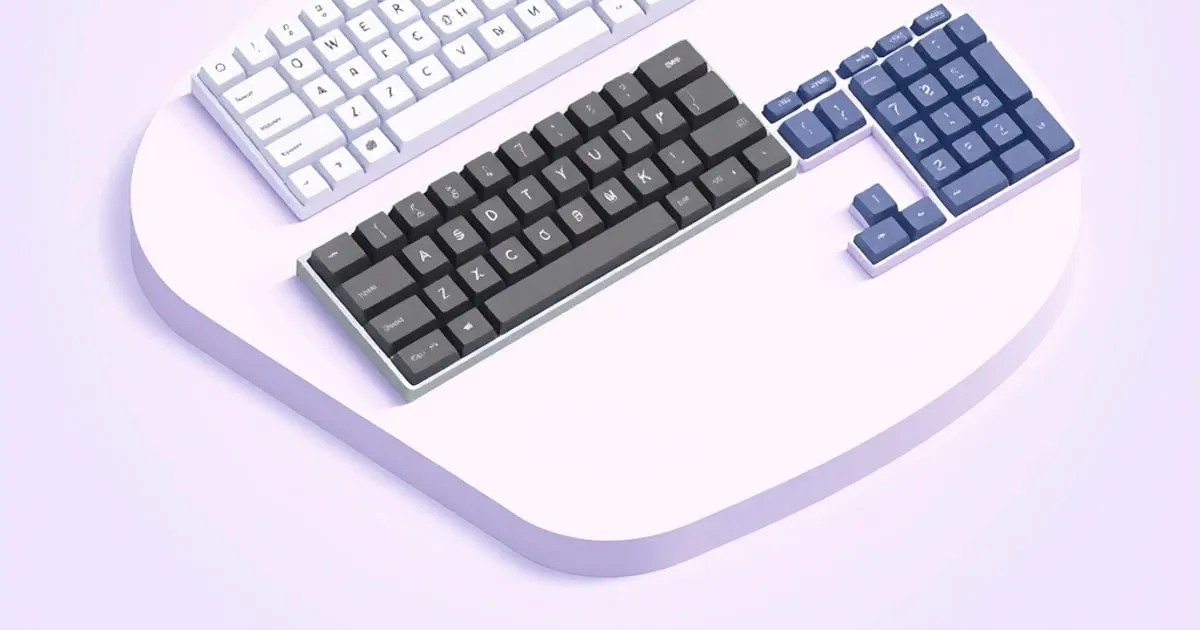
Aluminum vs Polycarbonate vs Plastic Keyboard Cases Compared
Case material is the most under-discussed part of how a mechanical keyboard sounds and feels. An honest comparison of aluminum, polycarbonate, and ABS plastic cases — what actually changes and what's marketing.
Switches get the marketing attention, but on a keyboard you already own, the case material has at least as much to do with how the board sounds and feels as the switch choice. Aluminum, polycarbonate, and ABS plastic are the three you’ll actually see on spec sheets. Here’s an honest comparison of what each one does, what it doesn’t do, and where it sits in a buying decision.
The three cases that actually show up
Lots of materials get name-dropped in marketing (brass, copper, wood, magnesium), but in the volumes most people shop in, three dominate:
- ABS plastic — the default for budget and most mid-range prebuilts. Cheap to mold, light, structurally fine.
- Polycarbonate (PC) — common on enthusiast and mid-tier custom boards. Often translucent or frosted. A different kind of plastic, not just a fancier ABS.
- Aluminum (typically anodized 6000-series) — the spec people associate with “premium.” Machined or cast, heavy, cold to the touch, color anodized.
A few boards mix materials (PC top, aluminum bottom, or vice versa). Treat those as compromises between the categories below rather than a separate class.
How case material changes sound
This is the change you’ll actually hear. The mechanism is straightforward: the case is the resonant chamber the switches and stabilizers sit in, so its material, density, and internal geometry shape what comes out.
- Aluminum tends to sound higher-pitched, cleaner, and more “clacky.” The metal is rigid and reflective, so impacts ring sharper. Without internal damping (foam, gaskets, or both), aluminum cases can sound harsh or “pingy” — a high metallic ringing after each press. Most modern aluminum boards include foam or gaskets specifically to tame this.
- Polycarbonate tends to sound deeper, softer, more “thocky.” PC is less rigid and absorbs more high-frequency energy than aluminum, so the sound that escapes the case is rounder. This is a big reason “thock” became associated with PC builds in the enthusiast scene.
- ABS plastic tends to sound hollow unless heavily foamed. The material isn’t bad, but it’s typically used in thinner-walled, looser-tolerance designs where the case itself rattles slightly under each press. That hollow quality is the sonic signature of cheaper prebuilts more than a property of ABS as a material.
A useful way to think about it: aluminum lets the sharp consonants through; PC rounds them off; thin ABS adds an unwanted vowel.
How case material changes feel
“Feel” here means typing feel, not switch feel — switches dominate the latter. But the case still contributes:
- Aluminum is stiffer. With most mounting styles, it feels firm under the fingers — fast bottom-out, less flex. Many people describe this as “precise.”
- Polycarbonate has more inherent flex. Combined with modern flex-friendly mounts like gasket-mount, it produces a softer, more “bouncy” typing feel. With a rigid mount, the flex is much less noticeable.
- ABS behavior depends heavily on wall thickness and design. Thin ABS feels flexy in an unintentional, rattly way; thick ABS feels close to a stiff plastic equivalent of aluminum, just lighter.
Mounting style interacts with material — a gasket-mounted aluminum board can feel softer than a tray-mounted PC board. Don’t treat the material as the whole story on feel; pair it with the mount type.
How case material changes weight and “premium” feel
This is the part marketing leans on the hardest, and it’s worth being honest about:
- Aluminum is dense (≈2.7 g/cm³). A full-size aluminum keyboard can easily exceed 2 kg. Heavier feels solid on the desk, doesn’t slide, and has a tactile “premium” quality in the hand.
- Polycarbonate is roughly half the density of aluminum (≈1.2 g/cm³, per material property databases like MatWeb ↗). A PC board feels substantially lighter for the same dimensions.
- ABS is similar density to PC (~1.0–1.1 g/cm³) but is usually paired with thinner walls, so ABS boards tend to feel even lighter than PC ones of equivalent footprint.
Weight is not the same as quality, but it does change how a board sits on the desk and how it feels to pick up. If you carry your keyboard between locations, aluminum’s weight is a real, recurring downside — light PC and ABS travel much better.
TL;DR
| Material | Sound character | Feel | Weight | Typical price tier | Best for |
|---|---|---|---|---|---|
| Aluminum (6000-series) | Higher, “clacky,” can ring | Stiff, precise | Heavy | Mid to high | Desk-only builds that prioritize solidity |
| Polycarbonate | Deeper, “thocky,” round | Some flex, softer | Light | Mid (often enthusiast) | Builds chasing modern “thock” sound |
| ABS plastic | Hollow unless foamed | Variable, often flexy | Light | Budget to mid | Travel, secondary boards, budget tiers |
Material properties, briefly and honestly
A quick sanity-check on the engineering side, since material marketing often blurs facts. Polycarbonate is a thermoplastic with a glass-transition temperature around 147°C, well-characterized in standard test methods like ASTM D3418 for thermoplastic transition behavior ↗; it’s tough, dimensionally stable, and frequently used where impact resistance and clarity both matter. Aluminum at typical keyboard alloys (6063-T6 is common, with property data published in databases like MatWeb ↗) is far stiffer and denser than either plastic, with a tensile strength roughly an order of magnitude higher than PC.
What this means for keyboards, in plain terms: aluminum is the rigid, dense case material; PC is the lighter, more compliant one; ABS sits below PC on toughness and is mostly chosen for cost. None of the three is bad — what matters is how each one is engineered into a finished case.
Common misreadings to avoid
A few claims that get repeated in keyboard marketing and reviews and don’t quite hold up:
- “Aluminum is always premium.” It isn’t. A cheap, thin-walled, undamped aluminum case can ring badly and feel worse than a well-designed PC board. Material doesn’t override execution.
- “PC is just cheap plastic.” PC and ABS are both plastics, but they’re different materials with different acoustic and mechanical properties. PC is typically more expensive to mold well than ABS, and many PC enthusiast boards cost more than equivalent aluminum ones.
- “Foam makes any case sound the same.” Foam helps, but it can’t fully erase the case’s natural character. A foamed aluminum board still tends to sit higher and brighter than a foamed PC board with the same switches and keycaps.
- “Heavier is always better.” Heavier is more solid on the desk, but it’s worse for travel, for arm-rest setups, and for keyboards you reposition often. Solidity is a property, not a virtue.
Where this slots into a buying decision
Case material matters, but it sits below layout size and switch type in the priority order — the things that affect what you can actually do with the board. Get those right first; treat material as a sound-and-feel preference layered on top.
A reasonable order of operations:
- Pick a size that matches your desk and workflow.
- Pick a switch family — linear, tactile, or clicky.
- Decide hot-swap vs soldered based on how much you plan to mod.
- Then pick case material based on the sound and feel you want.
A practical heuristic for the last step:
- Want a solid, precise, desk-anchored typing experience and don’t mind weight? Aluminum, with a board that includes proper internal damping.
- Want a modern “thock,” softer feel, lighter board, and you’ll never travel with it daily? Polycarbonate, ideally with a gasket mount.
- Want an affordable, light, “just works” board and don’t want a sound project? A well-reviewed ABS prebuilt is fine — pair it with decent stabilizers and good keycaps and you’ll get most of the way.
Case material is a real variable, just not the headline one. Get the structural decisions right and pick the material that matches the feel you’re after — not the one that sounds most premium on a marketing page.
Sources
Related
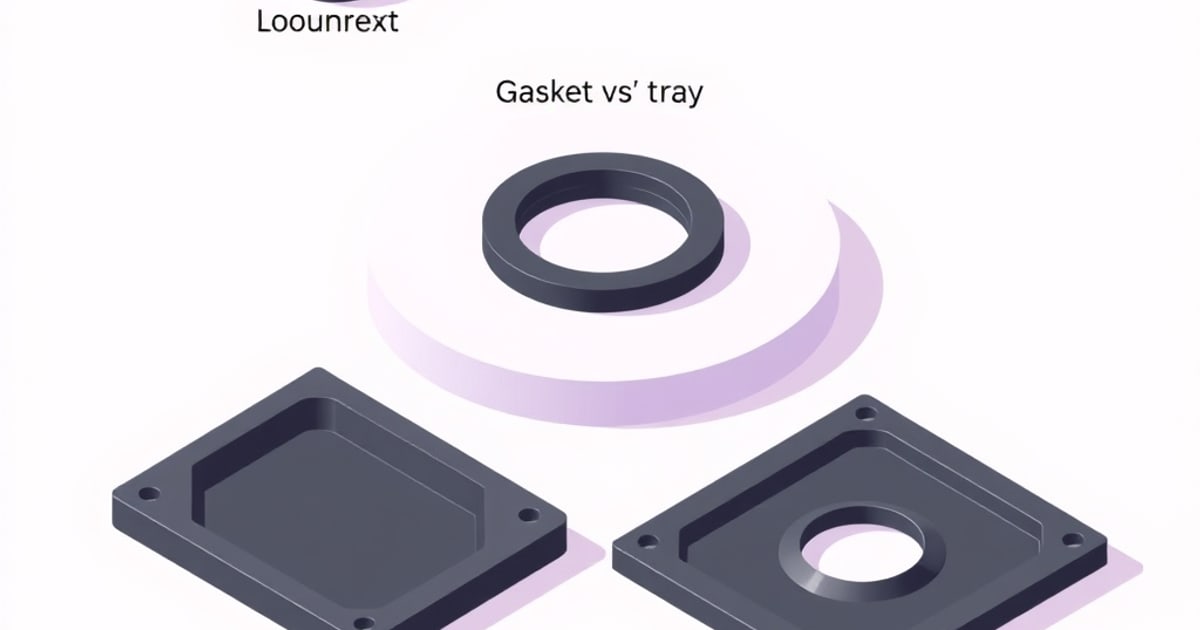
Gasket vs Tray vs Top Mount: Keyboard Mounting Styles
Mounting style is the spec enthusiasts argue about most and beginners understand least. A plain-English comparison of tray, top, gasket, and plate mounts — what each does to typing feel and sound, and how much it actually matters.

Prebuilt vs Custom Mechanical Keyboard: Which Path?
Buy one assembled board, or build it yourself from a kit? An honest comparison of prebuilt vs custom mechanical keyboards — the real cost, effort, and payoff of each, and who should genuinely go custom.
Hot-Swap vs Soldered Keyboards: Is Hot-Swap Worth It?
Hot-swap sockets let you change mechanical switches with no soldering iron. Here's an honest comparison of hot-swap vs soldered boards — what hot-swap really buys you, what it costs, and when soldered is still the better call.